

Industry Barriers Holding Back SMEs
and Consumers
Traditional financial systems continue to limit access, create inefficiencies, and slow innovation. Here’s why individuals and businesses are underserved — and why change is needed.

Restricted Access Hurts SME Growth
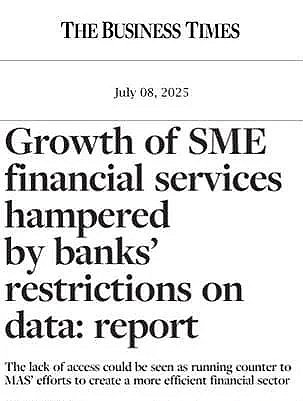
SMEs often struggle to access their own financial data. Many banks still restrict API access, forcing businesses to rely on outdated processes like spreadsheets and PDFs. This slows innovation, reduces financing options, and limits SME competitiveness.
30,000
hours of productivity lost annually by SMEs due to inefficient data access
Source: The Business Times

Innovation Bottlenecks
Innovation in financial services is constrained by outdated infrastructure that prevents FinTechs from scaling faster solutions. Limited API access further slows innovation, restricting SMEs from accessing better financing options. At the same time, weak collaboration between banks and SMEs continues to stifle progress. Overcoming these bottlenecks is key to building a more inclusive and competitive financial ecosystem.

Missed Opportunities
Without inclusive financial infrastructure, SMEs face higher operational costs, delays, and reduced competitiveness. At the same time, millions of individuals remain excluded from the digital economy, unable to access opportunities for financial growth and participation. This widening gap in access limits both individual prosperity and broader economic progress.

Breaking Barriers with Smarter Payments
By tackling these systemic barriers head-on, BlinqPay leverages technology, partnerships, and inclusive solutions to empower individuals, SMEs, and communities with the tools they need to thrive in today’s digital economy.